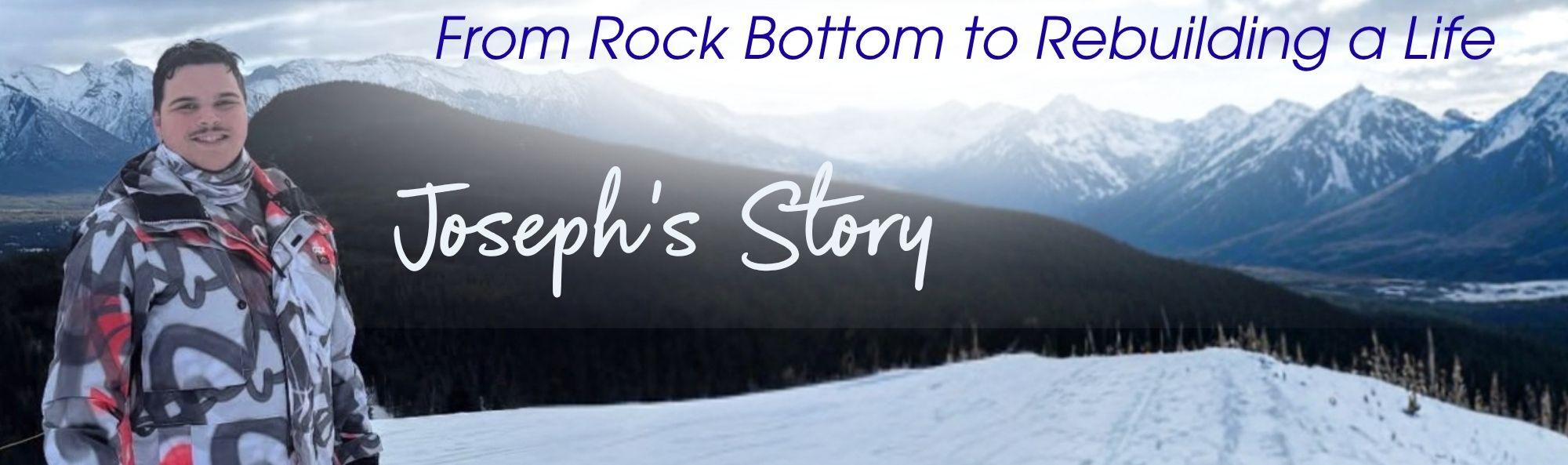
From Rock Bottom to Rebuilding a Life
Joseph was just 16 years old when he arrived at YES Shelter. By then, he had already experienced more than most people do in a lifetime – abuse, instability, and time in the foster care system.
Born Into the System
“I was born into a situation where my parents couldn’t take care of me,” he says. “We were taken pretty young.” Joseph and his older sister were placed into CAS foster care as very young children, they were shuffled between foster placements, each move adding another layer of instability to lives that had barely begun. At four years old, he was adopted alongside his sister by a stable, caring family in the Peterborough area. His mother was a social worker; his father, a nuclear physicist with a PhD. They were not wealthy, but there was always food on the table, heat in the home, and a roof overhead – things many children in care never find.
“My parents, they’re good people. My mom’s a social worker. My dad’s a radiation nuclear physicist. But me, I had a lot of anger. I never really knew where it came from.”
That anger – rooted in early trauma he couldn’t yet name – would shape the years to come.
A Path That Spiraled
As Joseph grew older, that anger began to shape his choices. He attended a private Catholic school in the Lakefield area, where his parents scraped together the fees, but he struggled to adapt. A self-described punk, he was drawn to fighting and rebellion and he rarely listened to anyone in authority.
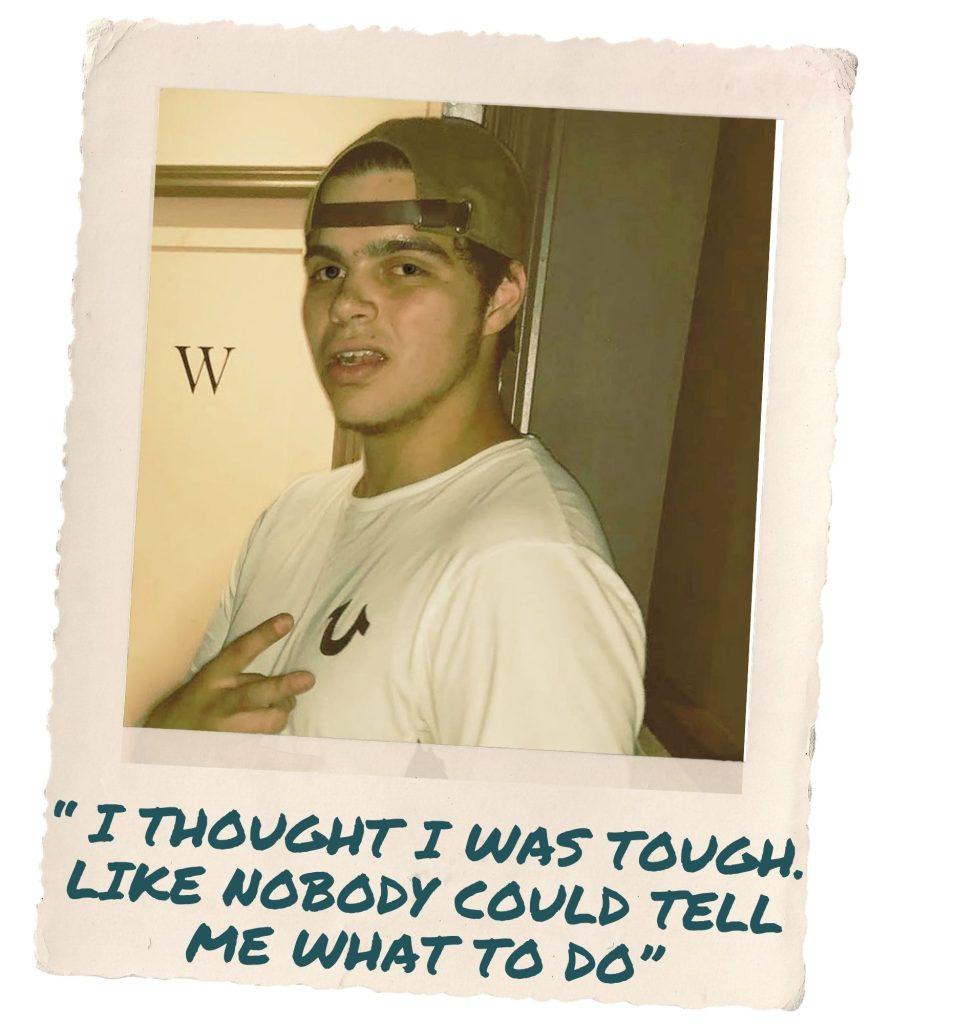
After moving to Holy Cross Secondary School in Peterborough, he found some outlet through Muay Thai boxing and football but, it wasn’t enough. Expulsions followed suspensions. By Grade 10, he had been expelled from Holy Cross and transferred to Kenner Collegiate, where he fell in with a harder crowd.
“You start skipping class, hanging out with the wrong people… and it just grows from there.”
What began as smoking weed to fund a habit quickly escalated. To cover the cost, he started selling it. The people around him weren’t the best influences, and his own choices made things worse. Soon, he wasn’t just selling marijuana. Kenner was where he was eventually expelled for being found with drugs, and had begun accumulating criminal charges.
“I got into harder drugs… carrying weapons… I thought I was going to be a gangster. I thought I was going to be Pablo Escobar.”
At 16, everything came to a head. Out on bail from juvenile court – with his father covering his legal fees – the tension at home became unmanageable. Joseph was withdrawing from drugs and unwilling to listen to anyone. The situation erupted. His parent’s made one of the most difficult decisions a parent can make – for the safety of Joseph’s younger siblings they told him he could no longer live in the home.
“I just kind of took that as – it’s what people do in my life anyway, so be it.”
That’s when he came to YES Shelter.
A Door That Was Open
“I landed at the shelter at sixteen… and I was already deep into that life.” At YES, he found safety – a place to sleep, meals, and support. The shelter also acted as his surety for the bail conditions, ensuring he met his curfew. But like many youth experiencing homelessness, change didn’t happen overnight.
The environment at the shelter was its own challenge. Older residents in their twenties were spending their days in trap houses and drug dens around Peterborough – places where he began to encounter people connected to serious gang activity, a world he was increasingly drawn into.
“You meet people, you’re still in that environment… I wasn’t ready to change yet.”
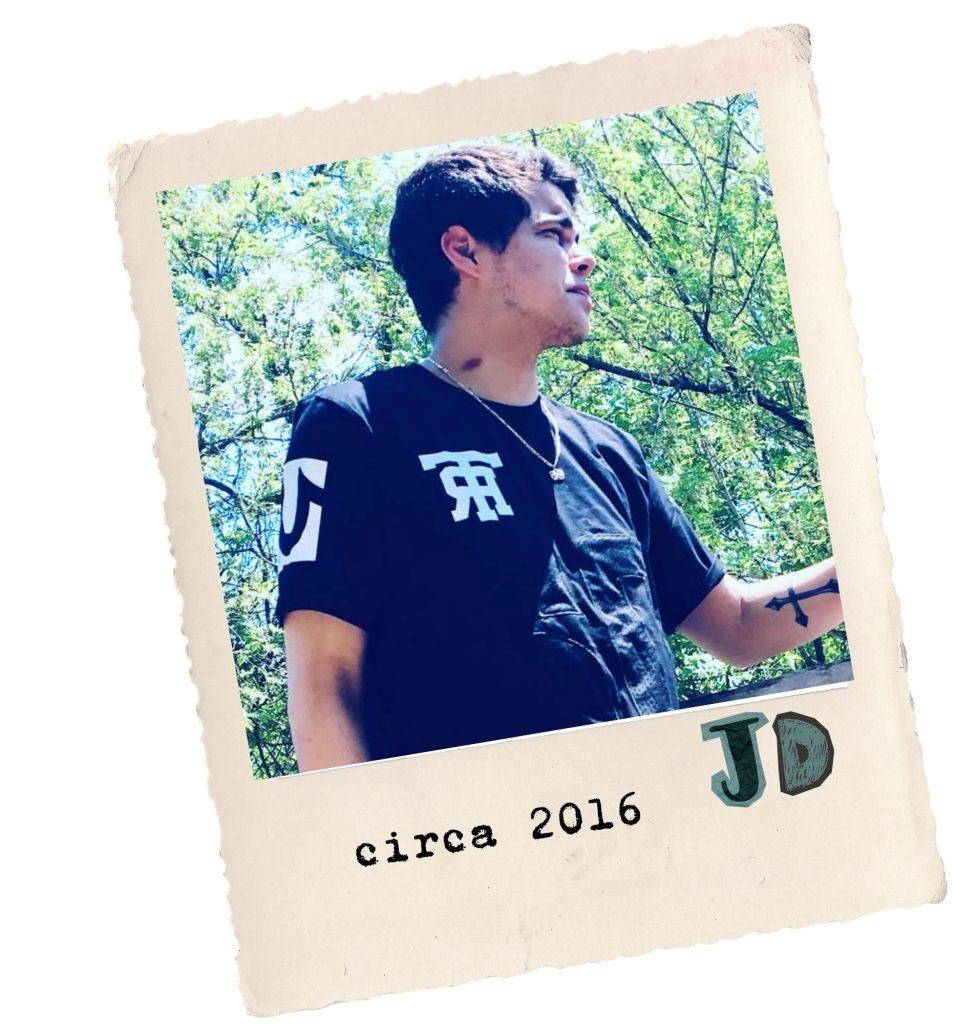
There were people at YES who tried to reach him. A teacher at the Carriage House program – he believes his name was Simon – was one of the few adults who seemed to genuinely believe in him.
“ He believed in me, for sure,” Joseph says. But even that wasn’t enough to break through at the time.
Over the next several years, he cycled in and out of stability, returning to the shelter at times, couch surfing at others, and becoming further involved in drugs and crime. He was addicted to Xanax and there were stretches of days he barely remembers.
“From 16 to 20… it was the same story over and over. Sometimes I had money, sometimes I had nothing.”
By the age of 20, Joseph had accumulated 168 pending criminal charges.
The Moment Everything Changed
Rock bottom didn’t come with a single event – it came with a mirror.
After days of heavy drug use, he woke up after sleeping for nearly 38 hours straight. The state of the room around him was something he doesn’t dwell on. He showered, wrapped a towel around himself, and stood in front of the mirror.
“I just saw this huge image I’d been trying to project – and I thought: this person isn’t me. Who are you? What has this gotten to? How far have you pushed this?”
He broke down. Smashed the mirror. And then he thought about everything – about being 19 years old while his peers were heading to university, about 168 charges, about the jail time he was staring down. And something shifted.
He picked up the phone and called his mom.
“I said, ‘Mom, it’s time. I got to come home. This is crazy.“
She was ready. His parents had watched the slow deterioration for years and had probably been waiting for the call. His mother took him to the psychiatric ward, where he spent several days speaking with psychologists who helped him begin to understand his trauma. He was given a medication plan and connected to therapy – sessions every two to three days as he came off the drugs cold turkey, seizures and all.
Rebuilding, One Step at a Time
It wasn’t easy. I had to rebuild everything – my health, my mindset, my future.
For two to three months, he was completely cut off from social media and outside contact. He focused on eating properly, getting back into the gym, reading, and doing therapy. Living at home on a surety bail made finding work difficult… every job interview required written approval from his probation officer, who was fielding dozens of emails a day. The bureaucracy was maddening, but he pushed through it.
He got sober. He completed his high school credits remotely finishing one credit every three weeks, tearing through textbooks, barely sleeping.“I was so hyped up, so pumped on life,” he says. “I just needed an inch. And once I got that… I ran with it.”
“It was almost like freeing – like the shackles had just been pulled off.”
He applied to Humber College for a real estate program. He was accepted, paid the tuition, and showed up – only to discover ten days in that RECO would not grant a license to anyone with a criminal record. Past the refund deadline. Money gone. Back to square one.
He kept going.
A Different Future
Joseph discovered a talent for sales and took a full commission role at a steel building company in
Markham. It was a dog-eat-dog environment, cold calls all day. He loved it. In his first year, he
won Rookie of the Year and earned a quarter of a million dollars.
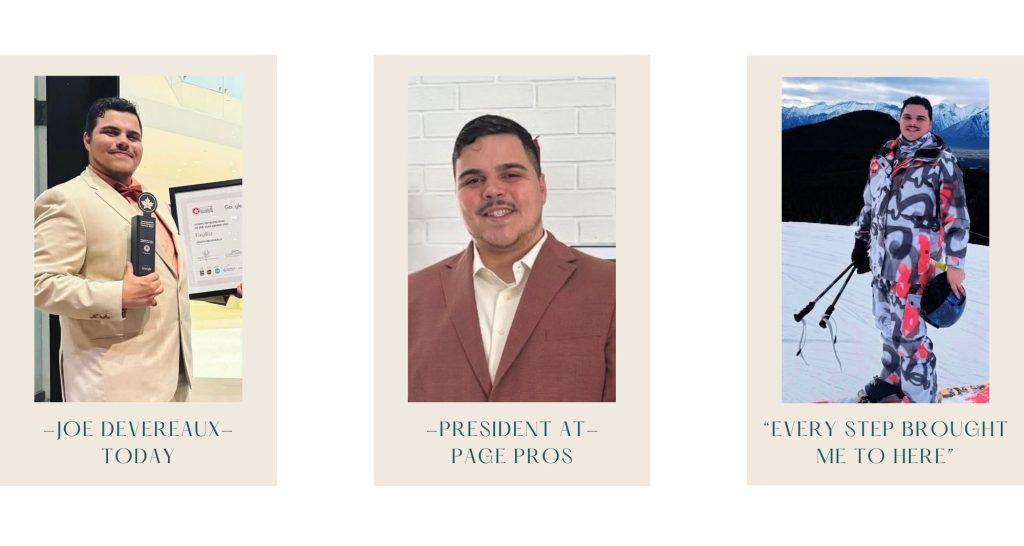
He eventually left to co-found his own company – Page Pros – a digital marketing agency he built
from scratch. Four months before his son was born, with his partner pregnant and living in her
parents’ home, he quit a job paying him $250,000 a year to bet everything on himself.
“Everybody thought I was ridiculous. My father-in-law. Everyone. But I knew.”
Year one, the company did $1.8 million. Year two, $4.5 million. Year three, $7 million. Today, Page
Pros employs 56 full-time remote employees across Canada – graphic designers, developers,
salespeople, account managers – and carries a valuation of approximately $22 million.
At 27, he has been a top-five finalist for Young Entrepreneur of the Year, presented by RBC, two
years running. But his proudest role isn’t on any shortlist.
“It’s being a dad. That’s everything. CEO, president, boss — my favourite title is always going to
be Dad.”
Becoming a father gave him a new sense of purpose and crystallised why the life he’d built
mattered. His birth father reached out after Joseph’s success and, he declined to reconcile. “My
real anger was never toward the world,” he says. “It was toward him. Not protecting us.” He’s made
peace with it, mostly. But his attention belongs to his son and the future, not the past.
Why YES Matters
Looking back, he knows how easily his story could have ended differently – in a penitentiary, or not at all.
“At the end of the day… I needed somewhere to go. That place mattered.”
YES Shelter was there at one of the most critical moments in his life – a safe place when everything else was falling apart, a surety when the courts needed one, a curfew enforcer that kept him from being locked up while he was still figuring himself out.
It wasn’t a straight line from YES to success. The journey was long, painful, and non-linear. But the foundation of safety and support it provided was part of what made change possible when he was finally ready.
“Nobody could have made me change,” he says. “I had to wake up one day and find that motivation myself. But I needed somewhere to go while I was getting there.”
He’s never forgotten that. Today, he gives back generously to SickKids, to community initiatives, and to efforts like the one that housed him at 16. He’s also helped his mother scale her social work business, coming full circle in a way that still surprises him.
Every year, young people come to YES Shelter carrying fear, trauma, and uncertainty – just like he once did.
With the right support, their stories can change. You can be part of that change.